Contents
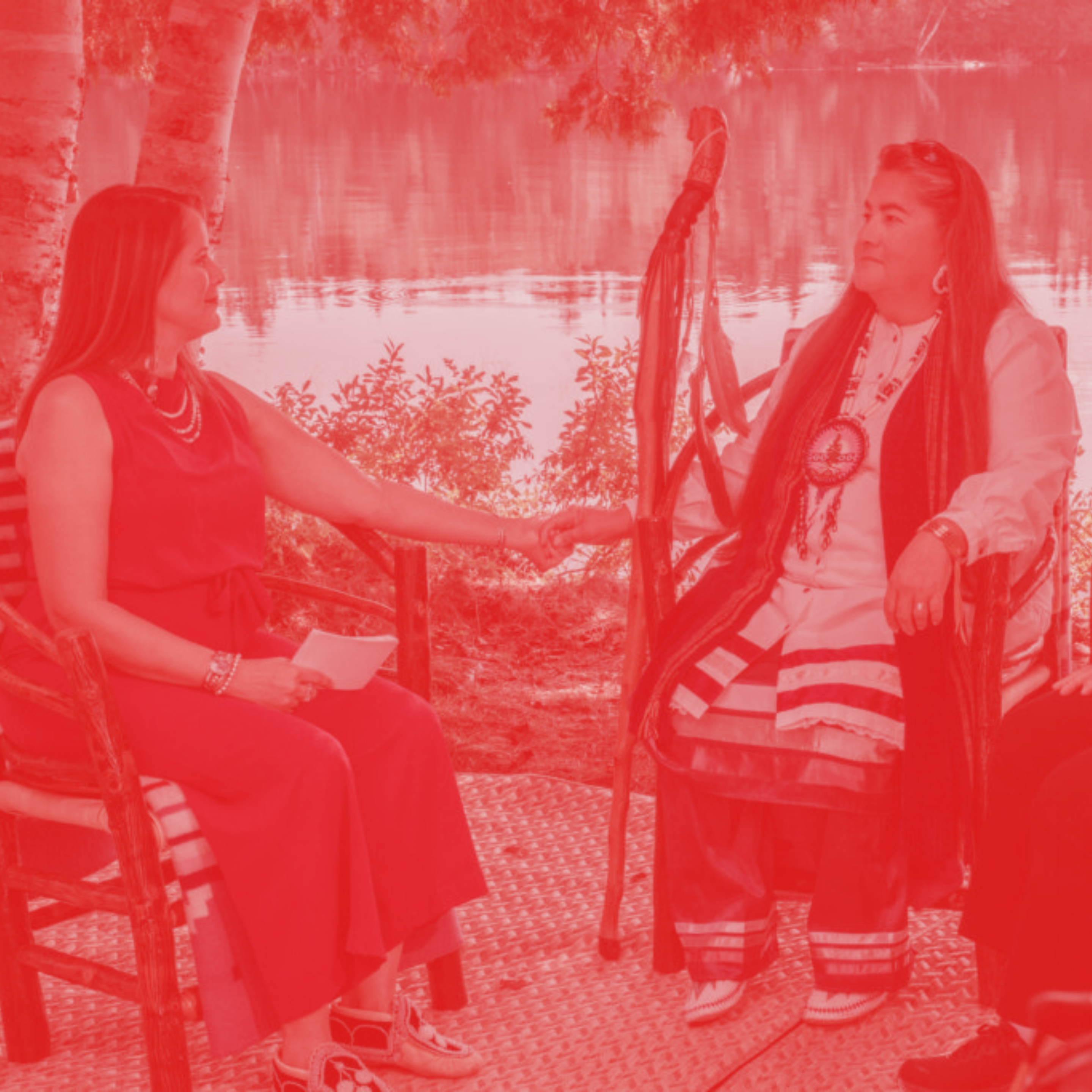
In the story he told, he said the people had forgotten and could not come to peace and agreement because they had no clarity to see the future. He said that people had lost their clarity because of the blinding tears of grief at the loss from all that had happened. That pain caused tears that blinded them from seeing. And he said that people had lost their ability to listen because of the grief felt at the pain from what had happened. He said people had lost their voices from the grief and pain, so they could not come to agreement. Their abilities to see, to listen, and to speak are the foundations of how to communicate and thereby find a future together. He said the people needed to take the stricken ones by the hand and helped them to raise their eyes to creation and find the purest cloud to wipe away the tears, for vision to be restored. Then they should look to creation again and find the softest feather for opening the ears so they could hear the wind, the birds, and all the things that make sound in the world. Then they should reach to creation still again and find the purest water to wash away the lump in the throat so they could speak again. To see, to listen, and to speak clearly are the essentials that brought agreement to his people 1000 years ago, and now we need this again.
Dahr Jamail & Stan Rushworth about Mohawk leader Jake Swamp-Tekaronianeken, We Are the Middle of Forever, 2022
Welcome
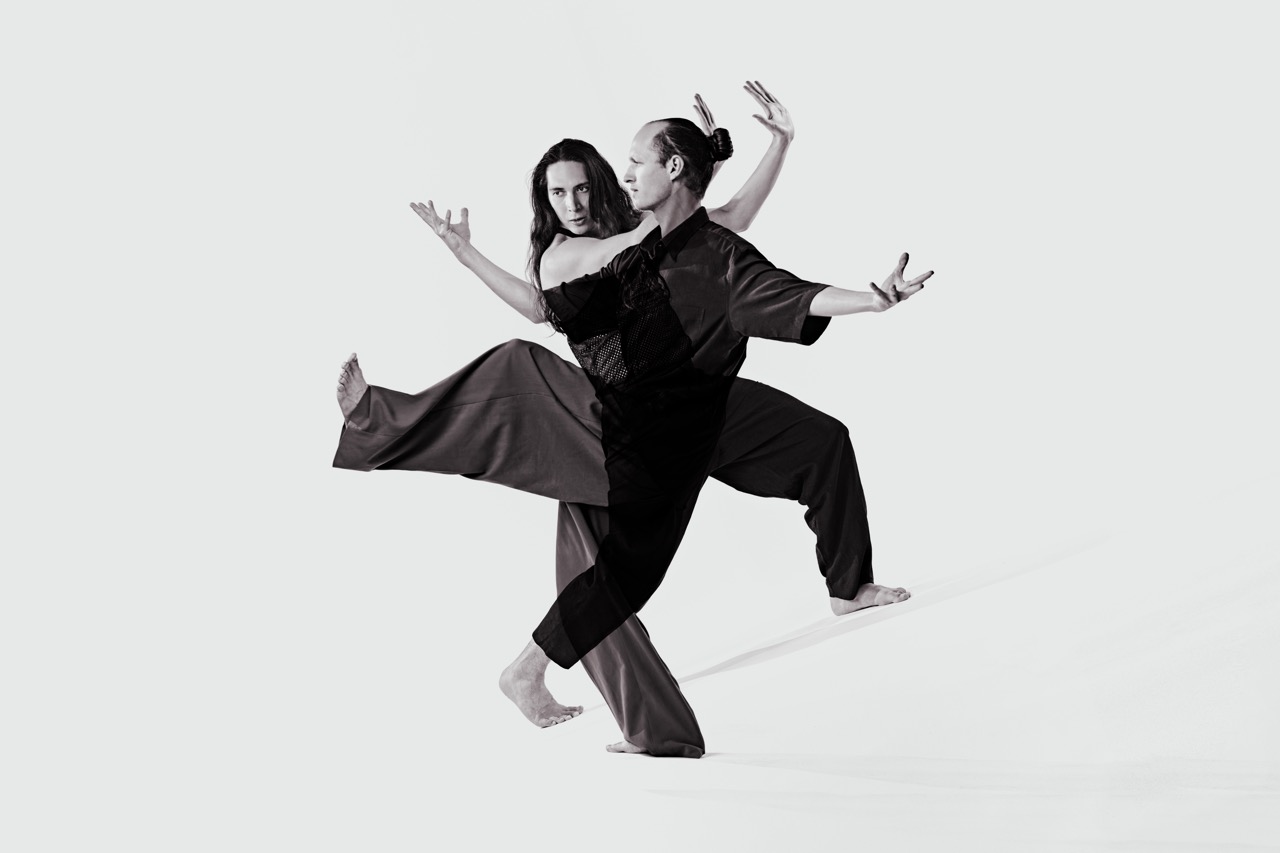
Inspired by the more than 400-year-old relationship between the Dutch and the Haudenosaunee, we invite you to consider possibilities of peacemaking – a counter-narrative in times of polarization, crisis, and war. What does it mean to be in relationship? What does it mean to be siblings? What does it mean to be human with responsibility toward each other? We come from vastly different worlds, yet we are connected by a colonial history. Beyond the trauma of that history, we are making an active attempt to map an embodied path toward a shared future.
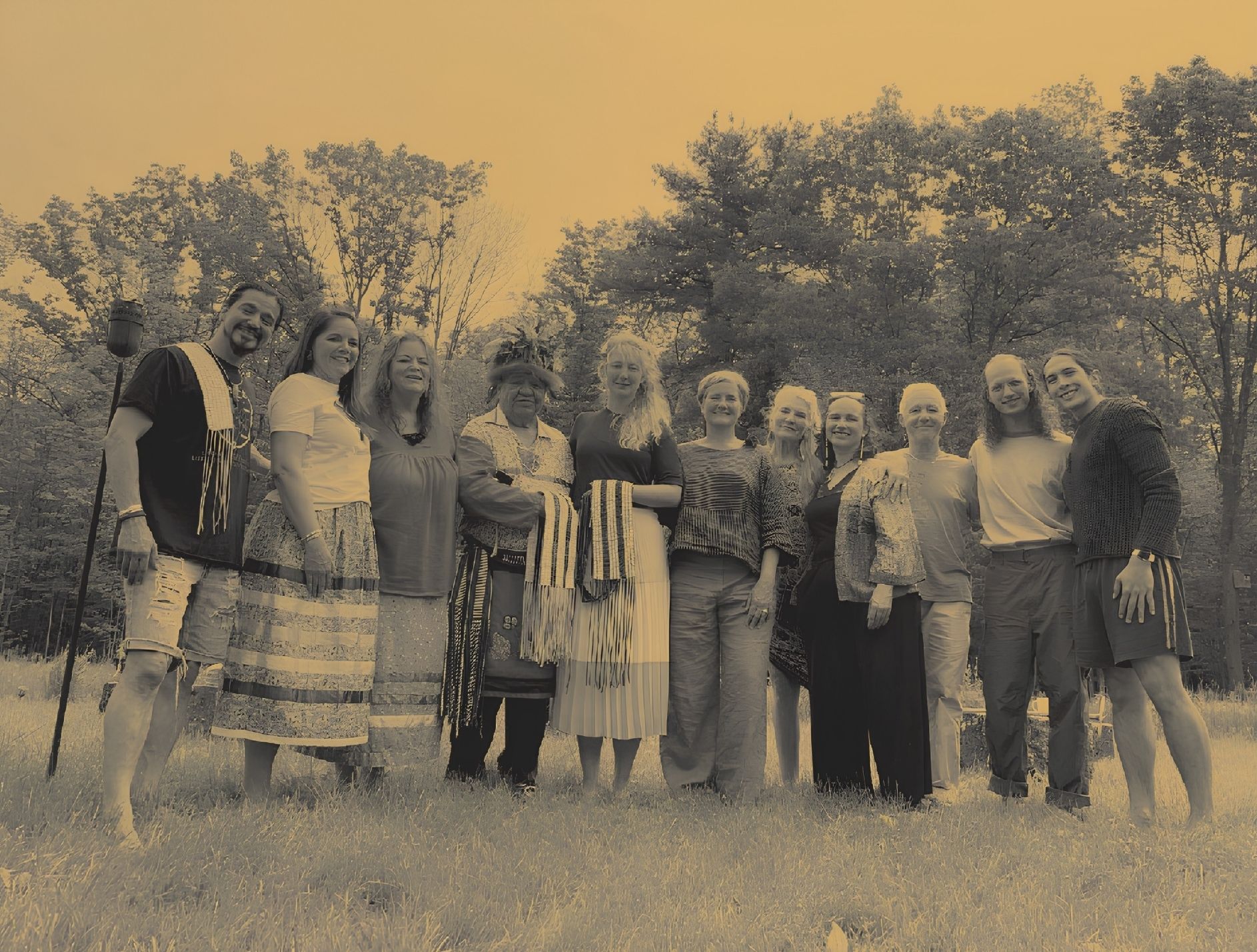
The team welcomed on Cayuga Land
Once upon a time
Four hundred years ago, Dutch traders sailed to Turtle Island (now called North America) and met the Haudenosaunee in their homelands by the Hudson River. After a process of vigilant consideration, an accommodating, respectful relationship of coexistence was formed. The Haudenosaunee welcomed the uninvited visitors and made ‘room in their house’ - an act of hospitality grounded in the understanding that the newcomers had arrived for a reason. Their agreement to live peacefully alongside each other was woven into the Two Row Wampum. A treaty grounded in the mutual commitment to peace, friendship, and respect - forever.
What followed, however, broke this balance. After sixty years the Dutch left, and the colonial expansion of other European nations brought an unprecedented violence. The Indigenous Peoples were systematically driven from their lands as the colonizers attempted to erase all Indigenous life and cultural expression—practices that are continuing still today. The Two Row continues to be upheld by the Haudenosaunee. The governments of the United States and Canada are represented by the parallel purple line. Yet, they have regularly broken those original agreements.
Across centuries, the Two Row Wampum remains a counterproposal: not a memory of lost harmony, but a reminder of how all humans can flourish alongside each other on Mother Earth, in a shared future.
TWO ROW WAMPUM
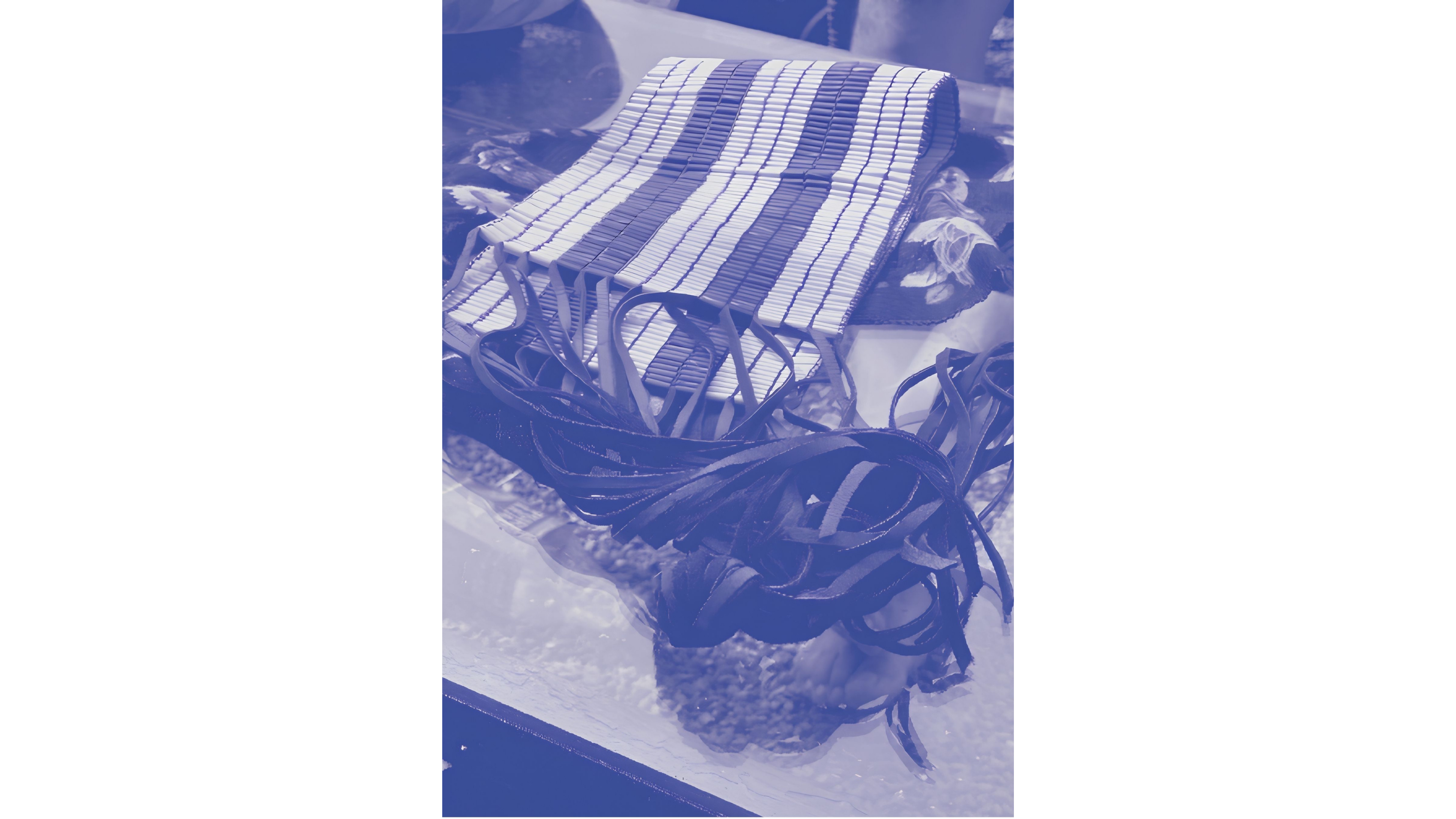
To preserve their history, culture, and processes, the Haudenosaunee primarily rely on oral tradition. Important events and treaties are also recorded in the form of belts made of quahog, hard clam shell beads, as mnemonic devices. The Two Row Wampum is a white belt with two parallel purple rows that visualizes the agreement to travel the river of life together, in peace, friendship and forever - for as long as the grass is green and for as long as the sun rises in the east and sets in the west and as long as water flows downhill - without interference in each other’s culture, language, way of life or cosmology. One purple row represents the Haudenosaunee in their canoe, the other the Dutch - or other colonizers - in their ships. In the United States constitution, these treaty agreements are the Law of the Land. Yet there is only one country that has never broken the Two Row Wampum treaty with the Haudenosaunee, the Netherlands. For that reason, the Dutch are still considered family. Thus, the Two Row agreement remains valid and continues to hold great value as a living heritage.
HAUDENOSAUNEE
The Haudenosaunee Confederacy is an alliance of six Indigen nations located in North-Eastern North America united for centuries by shared laws, traditions, and cultural values. Haudenosaunee means “People of the Longhouse”, referring to the houses in which the communities traditionally lived together. The nations are: Mohawk (Kanien’kehá:ka) - Keepers of the Eastern Door; Seneca (Onöndowa’ga) - Keepers of the Western Door; Onondaga (Onöñda’gega’) - Central Fire Keepers; Oneida (Onyota’a:ka) - People of the Standing Stone; Cayuga (Gayogo̱̱hó:nǫ’ ) - People of the Great Swamp; and Tuscarora (Skarù:rę’) - People of the Shirt, known as the Younger Brothers, who joined the confederation in the first half of the 18th century. To this day, the Haudenosaunee continue to assert their sovereignty, exert their treaty rights, and press for recognition of the genocide committed against their people. They remain silenced from full participation in international political discourse as well as absent within history education in the United States despite their international and national impacts on contemporary democracy and women’s suffrage.
Photo: The Two Row Wampum of Michelle Schenandoah
We are still here
A phrase that can be heard repeated often by the Haudenosaunee is: we are still here. THE HAUDENOSAUNEE AND THEIR CULTURE survived. Today they live across their ancestral territories and in small reserves, maintaining their own citizenship, with languages, and traditions. What was forced into silence has not disappeared. Ceremonies are practiced again. Knowledge from the past is remembered and passed on to the younger generations. Even though the history of violence persists into the present, so too does a way of life grounded in the practice of care: for each other, for the land, and for all living beings. What is offered through this practice is not a simple solution, but a perspective on how to live in resonance with the living world, based on the GREAT LAW OF PEACE and particularly the THANKSGIVING ADDRESS. At a time marked by the climate crisis, by the collapse of democracy, by wars, and a deepening division between all, the question arises: What has been forgotten? And what remains available to us now so that we can polish the silver chain of friendship for a tomorrow that looks after all future generations yet to be born?
DE HAUDENOSAUNEE CULTURE
The Haudenosaunee live in matrilinear societies, with a strong emphasis on balance between the genders: the Clan Mothers have an important place in all decision making of the community and appoint the chiefs; the Chiefs serve their people with wisdom and accountability, not with power, and Faith Keepers take care of ceremonies and traditions.
For the Haudenosaunee the whole living world are relatives. Everybody contributes to the community with their own skill set. Next to offering space for all genders the Haudenosaunee relate the role of the male to the sun, describing the male responsibilities as: giving warmth, continuity, support and fostering growth. This offers a much-needed positive portrayal of the role of men within a community—one that is not about dominance, but about care.
From a young age all are taught to act from the Good Mind, joyfully, and to act with gentleness, in relation to seven generations in the future and seven generations in the past. These are values urgently needed in today’s world where individualization and polarization overshadow the deeply human sense of cooperation.
GREAT LAW OF PEACE
About 1000 years ago,after many years of violent wars, the battling nations living in the Northeast on Turtle Island buried their weapons under the roots of a white pine tree. The Great Peacemaker ended their cycles of warfare by founding the Haudenosaunee Confederacy through a sophisticated system of consensus-based, democratic, decision-making, and federal governance, grounded in balance and collective responsibility. Working with Hiawatha, he united the Mohawk, Oneida, Onondaga, Cayuga, and Seneca nations, and transformed the feared war leader Tadodaho into a central figure of the new order—symbolizing that peace is actively made through forgiveness and rational thought.
The Haudenosaunee Confederacy now stands as one of the earliest enduring models of participatory governance and federalism, often cited as an influence on modern democratic thought, particularly in North America, by demonstrating that large-scale political unity and peace can emerge not from domination but from negotiated interdependence.
ENCOUNTER IN AMSTERDAM
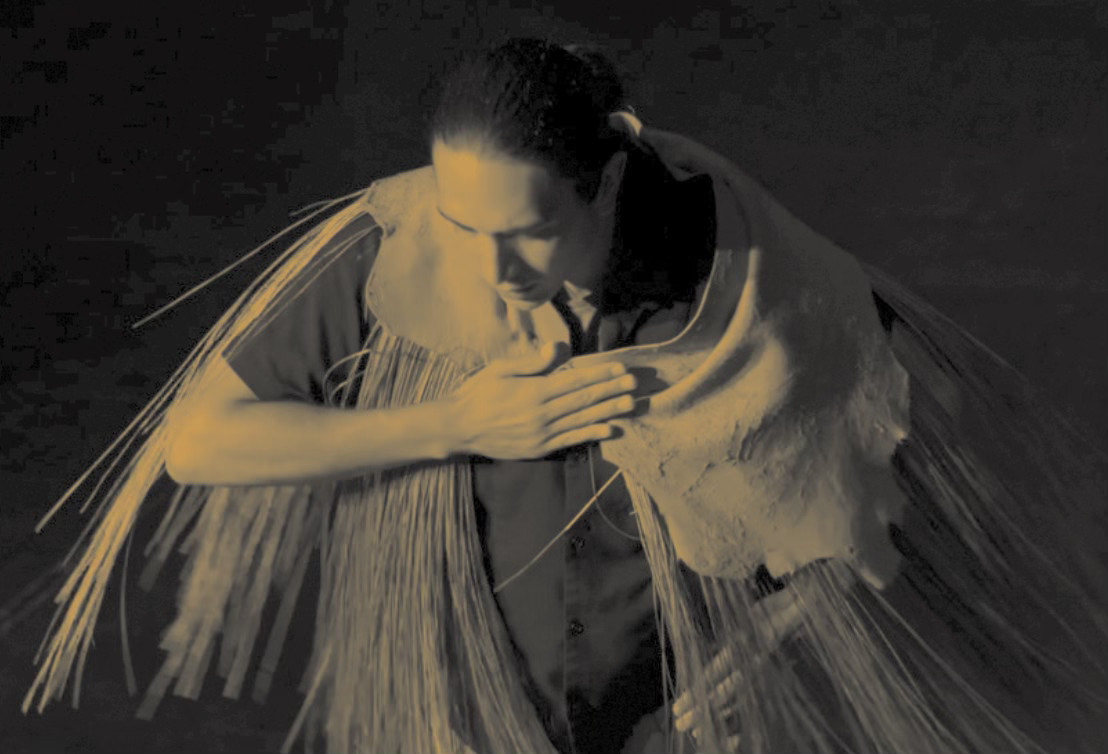
The team of NICOLE BEUTLER Projects first met NEAL POWLESS at their studio in Amsterdam and he began this meeting with the THANKSGIVING ADDRESS. He took ample time offering gratitude to all elements and forces in the living world, and to the moment of being together.
Something shifted.
Neal shared all-encompassing vision of the world, coherent, clear, and simple. Through his stories, a different perspective on life appeared: one grounded in community, care, and kindness. Not as an idea, but as a practice. The Haudenosaunee believe that ALL humans received ORIGINAL INSTRUCTIONS on how to live here on earth and how to be human - yet this deep knowledge has largely disappeared from the European frames of reference. Intuitively understanding that their cosmology could point the way towards an alternative for the future, the desire grew to dive deeper and learn more.
NICOLE BEUTLER
is an acclaimed choreographer and theatre maker with a background in visual arts and German literature. Her socially engaged work combines dance, theatre, music and visual art into a Gesamtkunstwerk. She is known for her inquisitive approach and for constantly pushing the boundaries of dance. She has been leading her company Nicole Beutler Projects since 2009.
NEAL POWLESS
is Onondaga Eel Clan, lives in his ancestral homelands. He is ombudsman at Syracuse University and former professional Lacrosse athlete, storyteller, public speaker, and the co-founder of Indigenous Concept Consulting, an organization that shares Indigenous values with the world. Neal Powless invited Nicole Beutler Projects to his homelands.
THANKSGIVING ADDRESS
An essential part of Haudenosaunee tradition, also known as “the words that come before all else”, is the Thanksgiving Address. It is spoken in Haudenosaunee languages both in daily life and before and after any significant gathering, ceremony, council meeting, at the start of the school day, as daily sunrise prayer.
This practice of giving thanks and expressing gratitude to all elements of the living world and to Mother Earth and her inhabitants, is used to unite minds as one. It teaches that everything is connected, as well
as mutual respect, to embrace people everywhere as family, generosity, and love. It teaches conservation, and the responsibility to understand that what is done to one part of the web of life, is done to all.
ORIGINAL INSTRUCTIONS
The Haudenosaunee believe that all humans received original instructions on how to live here on Earth and how to be human, yet some people seem to have forgotten these teachings. The Haudenosaunee still live by these today.
- Only take what is given
- Give thanks for what you receive
- Never take more than you need
- Never take the last one of anything
- Never take the first or last of anything to make sure there is always something left for those that come after you
JOURNEY TO SYRACUSE
Neal Powless invited the team of Nicole Beutler Projects to
spend time with the Haudenosaunee community in their homelands. Arriving as guests, they were aware that for most Indigenous people, they brought along the history of white colonization.
They were generously received by Elders, Chiefs, and Faith Keepers. With the EDGE OF THE WOODS ceremony, a traditional dinner, and a sweat lodge they were welcome to the Mohawk territory; once through the Western Door, the Oneida’s cleansed them off and welcomed them to their lands; the Cayuga also welcomed them to their lands, as did the Onondaga; they
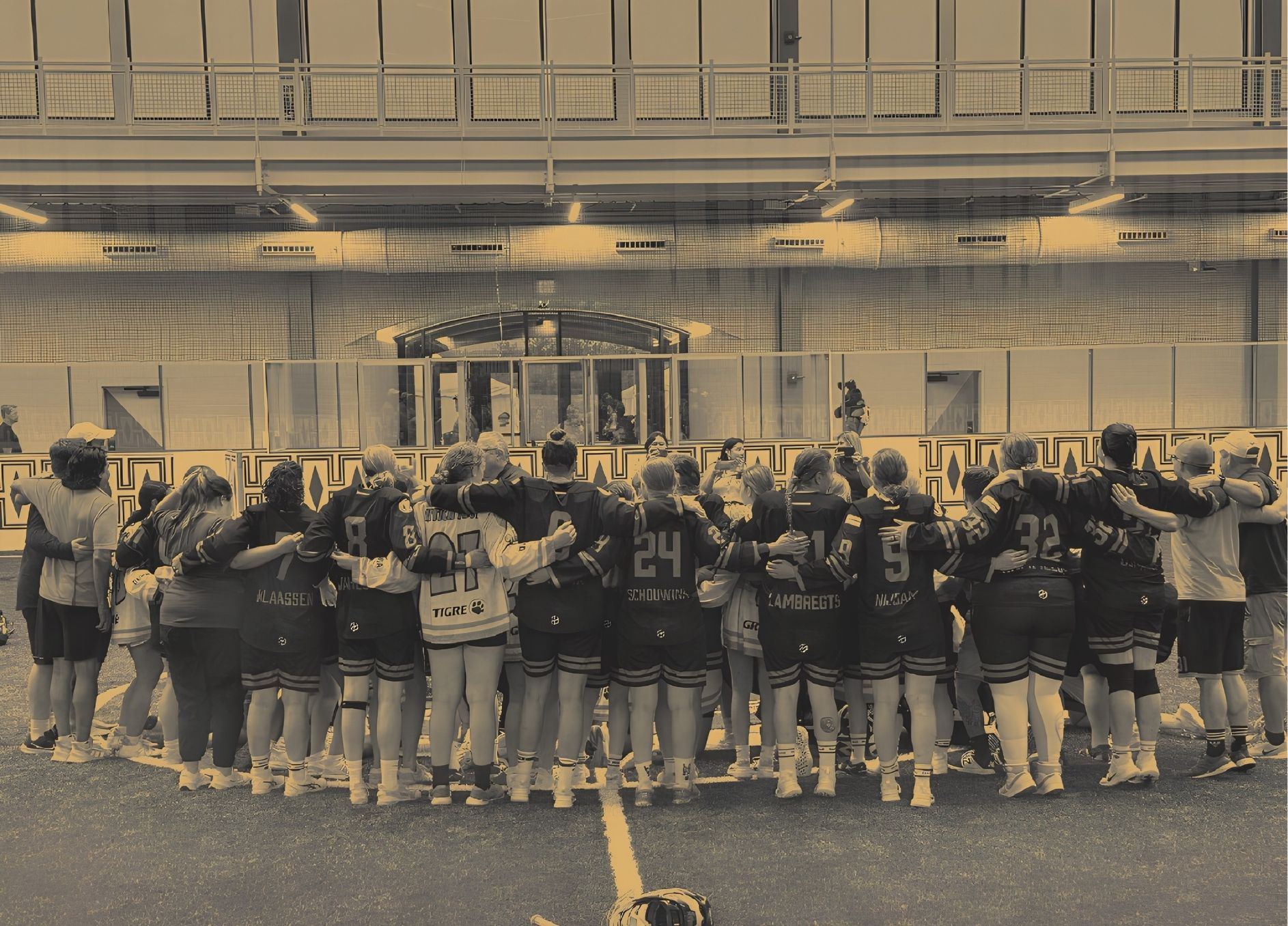
learned that the nations were celebrating the return of their brothers and sisters. They also learned of the essences of LACROSSE and its significance for the Haudenosaunee. More than a game, it is medicine for the soul, a player’s gifts can be displayed, and players learn of the importance of teamwork over self-gratification.
An alternative for being in the world became tangible - grounded in reciprocity, gentleness, and equity. The crucial question was: how to continue this encounter without repeating the very patterns they seek to challenge?
In conversation with MICHELLE SCHENANDOAH an answer emerged: not extraction, but co-creation. So their agreement was sealed. It was no longer about translating knowledge, but about working together—together in difference, in search of a shared future.
This marked the beginning of ROOM IN OUR HOUSE.
EDGE OF THE WOODS
This Haudenosaunee welcoming ceremony is designed to greet visitors, often at the forest’s edge, to transition them safely into the community. It serves as a cleansing ritual meant to clear the minds, ears, and throats of the travelers - symbolically wiping away the burdens and tears of their journey - so that they may enter and communicate with a clear and peaceful mind. This ceremony serves as a crucial moment for fostering peace and turning strangers into friends.
LACROSSE
The extremely physical team sport played with a scooped stick and a hard ball. It is the oldest team game in North America, with its origins with the Haudenosaunee ‘since time began’ - as it is told to have come to this world with Sky Woman. In the traditional version, each team could consist of anywhere from ten to thousand men on a field several kilometers long. These games could last from sunup to sundown for two to three days straight and were played as part of ceremonial ritual, as medicine and as a replacement to warfare.
MICHELLE SCHENANDOAH
is a member of the Oneida Nation Wolf Clan, inspirational speaker, co-founder of Indigenous Concept Consulting, and founder of Rematriation. Her organization engages in uplifting indigenous women’s voices, indigenous knowledge, and history. The core philosophy of Rematriation is: returning the sacred to the mother. Michelle is the co-director of this work.
ITHACA AND SYRACUSE
WORKING TOGETHER
A team of artists, musicians, and cultural advisors from two worlds came together in Cayuga land, followed by a longer time shared in the land of the Onondaga. Celebrating their different backgrounds and practices, guided by a shared commitment: to learn from each other in curiosity - without erasing differences.
The process unfolded by sharing stories, dances, and music, and by time spent in nature. Listening, experiencing, and two-way-learning became main practices – challenging all senses, shaping a common space: talking about hesitations and fears of this encounter, holding space for all questions and sensitivities of trauma and guilt, and slowly developing trust. The life affirming and joyful, all-encompassing vision of the world that the Haudenosaunee live by created a gentle bedding for this process.
What began with caution gradually unfolded into a shared engagement in this project—and in the possibility it carries. The awareness of the past liaison inscribed in the 400-year-old relationship through the TWO ROW WAMPUM became a guideline in all considerations.
Campaign image: Kwadwo Amfo | Design & Art Direction: Studio Colorado
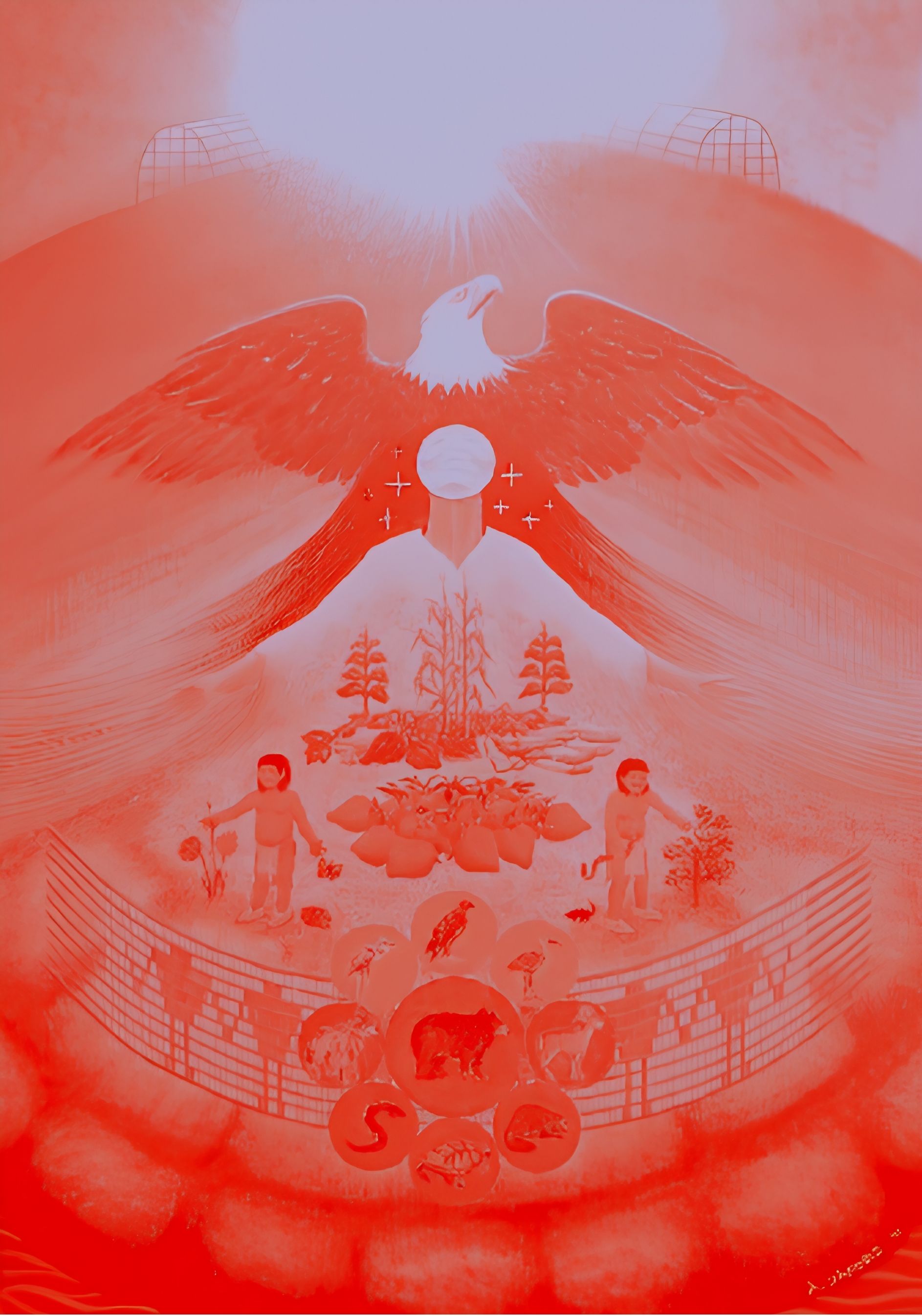
HAUDENOSAUNEE CREATION STORY
Sky Woman falls from Sky World into a dark water-covered world, pregnant with the seeds of life. A flock of geese catches her, preventing Sky Woman from falling into the endless sea. They place her on the back of a giant turtle. She asks the water animals to retrieve earth from the bottom of the sea. After several attempts, a muskrat succeeds in bringing up a handful of mud. Sky Woman spreads this mud on the turtle’s back, which through dancing and singing gradually grows and expands to become the land known as Turtle Island (North America). Sky Woman gives birth to a daughter, who later dies while giving birth to twins. Her grave becomes the source of abundance: from her body grow the Three Sisters: corn, beans, and squash. From her heart sacred tobacco grows, from her fingers and feet grow strawberries and other plants that sustain all life. The twins are Teharonghyawago (the Right-Handed Twin, who dwells in the sky) and Tawiskaron (the Left-Handed Twin, who dwells in the darkness). Their constant rivalry, and what they create on Mother Earth, represent the dualities and balance in the world.
POEMS BY TY DEFOE
I remember
before their footsteps,
before the bark canoes
and the hulls of Dutch ships.
I moved between roots and clouds,
carrying stories not yet spoken aloud.
Then they came—
first the ones who called the animals relatives,
who listened to the wind and fed the fire with care.
They placed their vessels gently on my back,
as if they knew I had memory.
Then came the others—
with metal, cloth, and eyes that measured.
They didn’t ask, not even with their words.
I watched them both.
I held them both.
They did not blend,
and I did not ask them to.
Two vessels.
Side by side.
Not one trailing.
Not one crossing.
Their agreement flowed with my current:
travel together, never interfere.
They call it the Two Row.
Now, you come to me with questions.
Can we walk together still?
I answer the only way I know how—
by holding each of you as you are.
By reminding you, I am still here.
And so is the promise.
Clouds drift slowly across the sky—
never in a hurry.
Their movement carries stories,
shadows and breath of ancestors
gathered in mist.
They know the silver chain—
an intention of balance between all who hold it.
We gather now to polish the silver chain
—through Moon, Sun, and Rainbow.
We tend to the sacredness between us
anchored in respect.
Grandmother Moon,
her changing face reflects
the precious cycles of women,
ushering life through their vessels.
She is a keeper of tides and time,
a conduit between earth and sky.
Elder Brother Sun,
leader of men,
teacher of consistency,
silver links shining in his path.
He brings nourishment for seeds to root,
tends warmth for families to thrive,
offers light so the community may rise.
Rainbow,
light of the in-between—
they move across the sky like prisms of becoming.
Where light meets water,
glistening into story, fluidity—
and for a moment we experience
Awe.
This silver chain does not rust,
but it will tarnish if neglected.
It does not break, unless denied.
Clean it with speech.
Polish it with your presence.
Love it with soul,
for your great-great-grandchildren.
We are fastened together:
stone to root,
person to person,
all living beings—
the finned, the two-legged, the four-legged,
the rooted, the branched, the winged,
and the wind.
Hold your place.
Speak your truth.
Tend to your relations.
Let the chain shine silver
for seven generations to come.
Everyone lives—
along the roots of peace
beneath our steps, stretching vast,
in every direction.
Weapons are being laid to rest,
buried after generations of war,
and from our soil a new kind of governance arises—
inspiring constitutions and people everywhere,
fueling collective visions,
sparking a new era of peace.
It is a language of trees—
spoken in rafters and branches,
fluent in scent and color,
where relationships are our medicine.
Lands are not owned, they’re nurtured—
as one nurtures kin: with care, with reverence.
A relation, a connectedness, like mother and child.
With the concept of a Good Mind—
like a clear, still,
unpolluted lake,
reflecting all in balance.
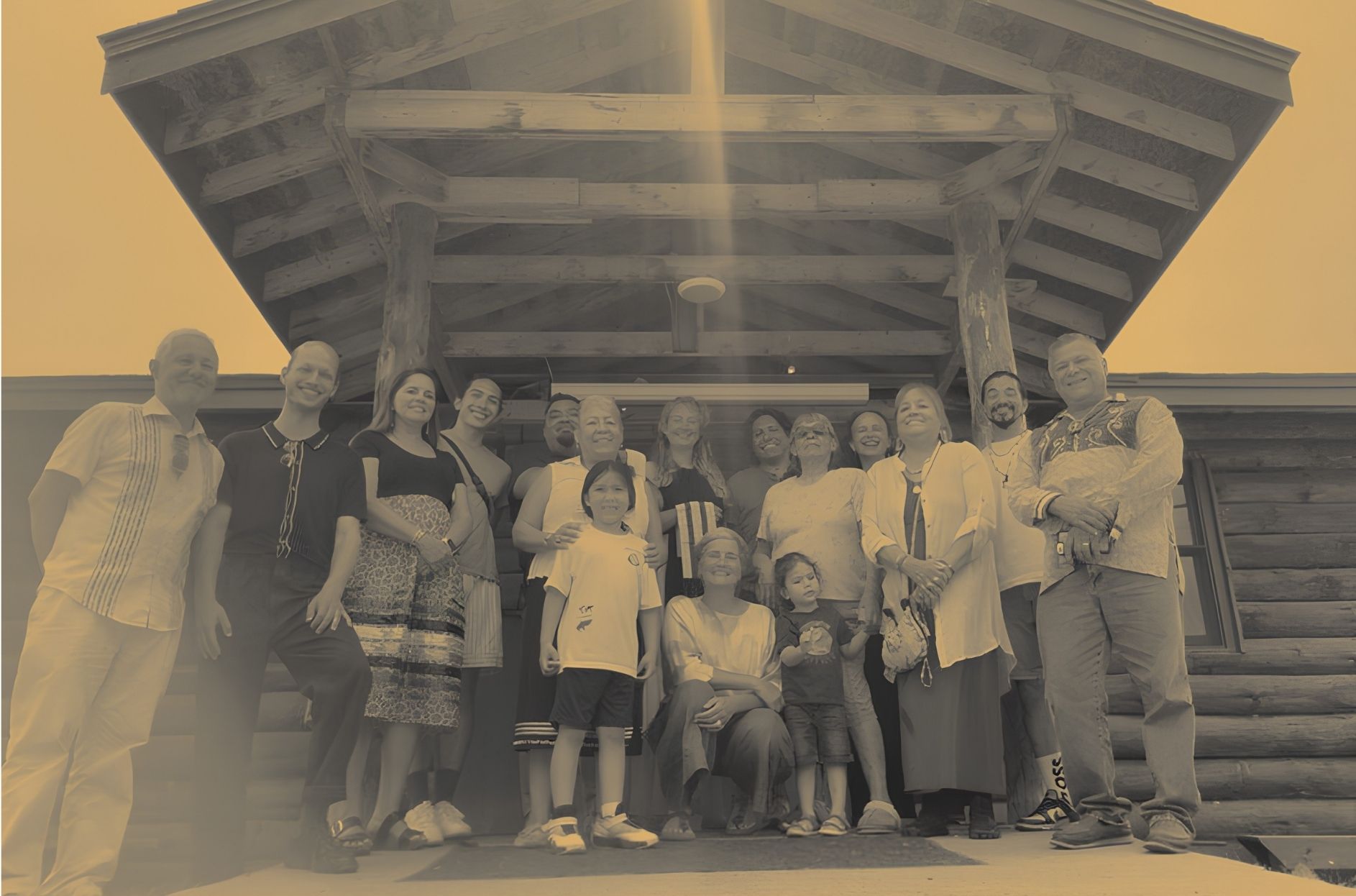
The team welcomed to the Onondaga Longhouse
Begin with the seeds—
like the strawberries,
tiny as breath, offered.
Bright on the surface,
teaching abundance without greed.
Heart-shaped, low to the ground,
they show us how to give—freely,
and only take what is needed.
From this we sing—
to return to the roots of peace
still humming beneath us.
we dance—
to remember,
to serve what is yet to come,
with gratitude.
The heartbeat of Mother Earth,
a rhythm—
persistent, relational,
a pulse we share.
To share is to have abundance.
It is to braid:
words with water,
land with memory,
the Haudenosaunee Good Mind
with the open sky of Dutch clouds.
Let us remember how to hold space—
to listen, to speak only after listening,
with compassion.
Let us listen,
let the words fall upon us
before we speak,
like a river’s curve around the stone.
It is your weight welcomed into my canoe,
because you asked, and I consented.
Let us forgive.
Stories ripple.
We carry them on.
Around circles we build language, cosmology—
where the center holds invitation.
So come to the center.
Bring what you are ready to place down:
your seeds,
your snow,
your sorrow.
Let us make something of it—
something that nourishes,
something that lives,
because we do not keep it to ourselves.
Wampum— purple and white
woven in laughter,
woven in wisdom,
weaving nations and nature.
Wampum— purple and white
woven in stories,
weaving threads of history,
weaving past, present, and future—
four hundred years, an unbroken treaty.
Wampum— purple and white
woven in memory,
woven in promise,
weaving sea and land.
(peace, friendship, forever)
Wampum— purple and white
democracy: a fire tended by many hands,
it listens more than it speaks,
and survives when we remember each other.
Wampum— purple and white
equity begins where understanding deepens,
peace is not the absence of conflict,
but the presence of respect.
Wampum— purple and white
reminding us—what is shared,
what is sacred,
what remains.
The path is forward.
Peace. Peace. Peace.
skʌna\’kó: Vrede. Peace.
TY DEFOE
is an interdisciplinary artist and writer. Living in New York, Ty grew up in Wisconsin in the Ojibwe and Oneida communities. His practice exists at the intersections of art, climate justice, and cultural activism. For ROOM IN OUR HOUSE, he wrote these poems as well as collaborated on the music.
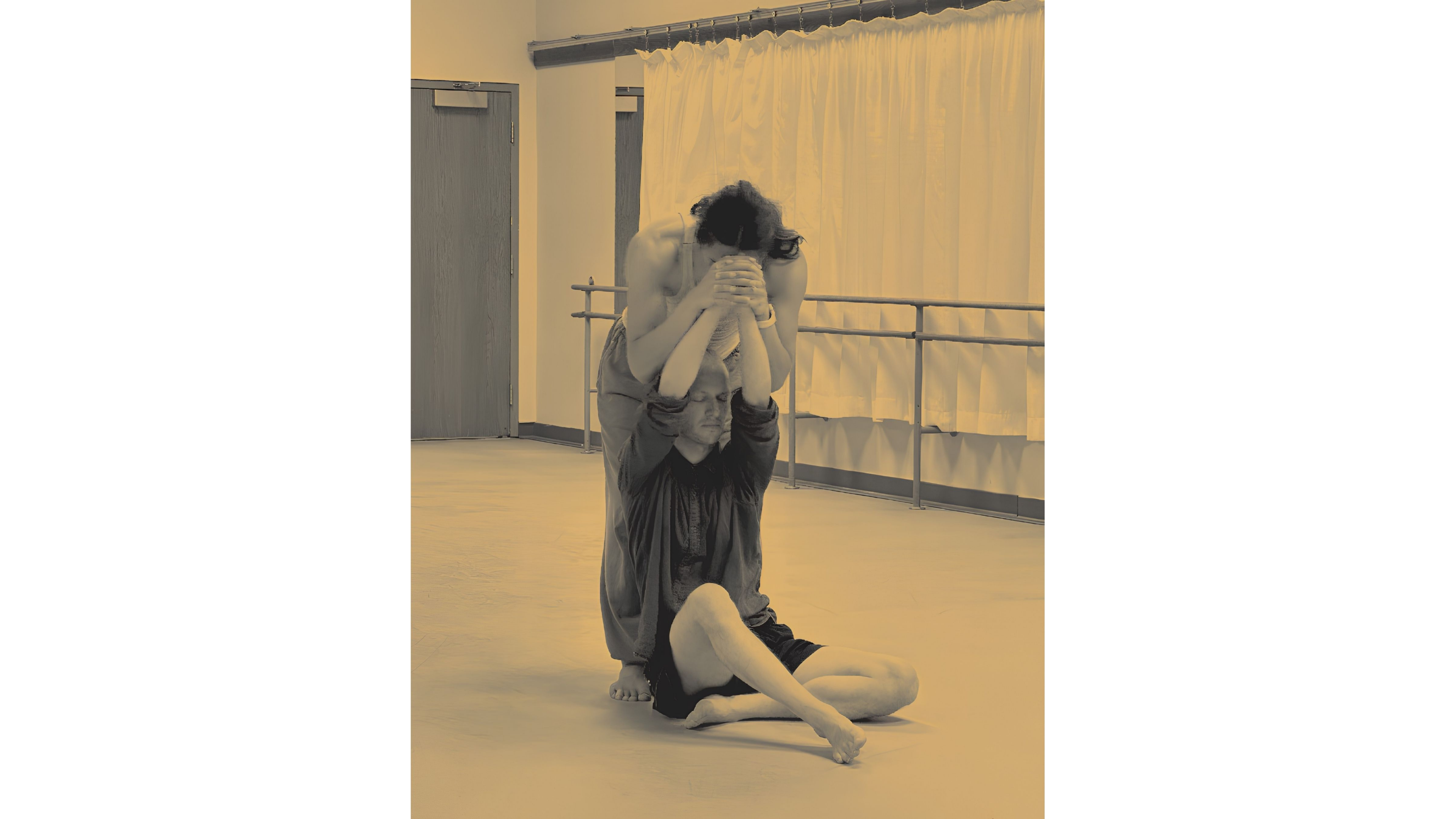
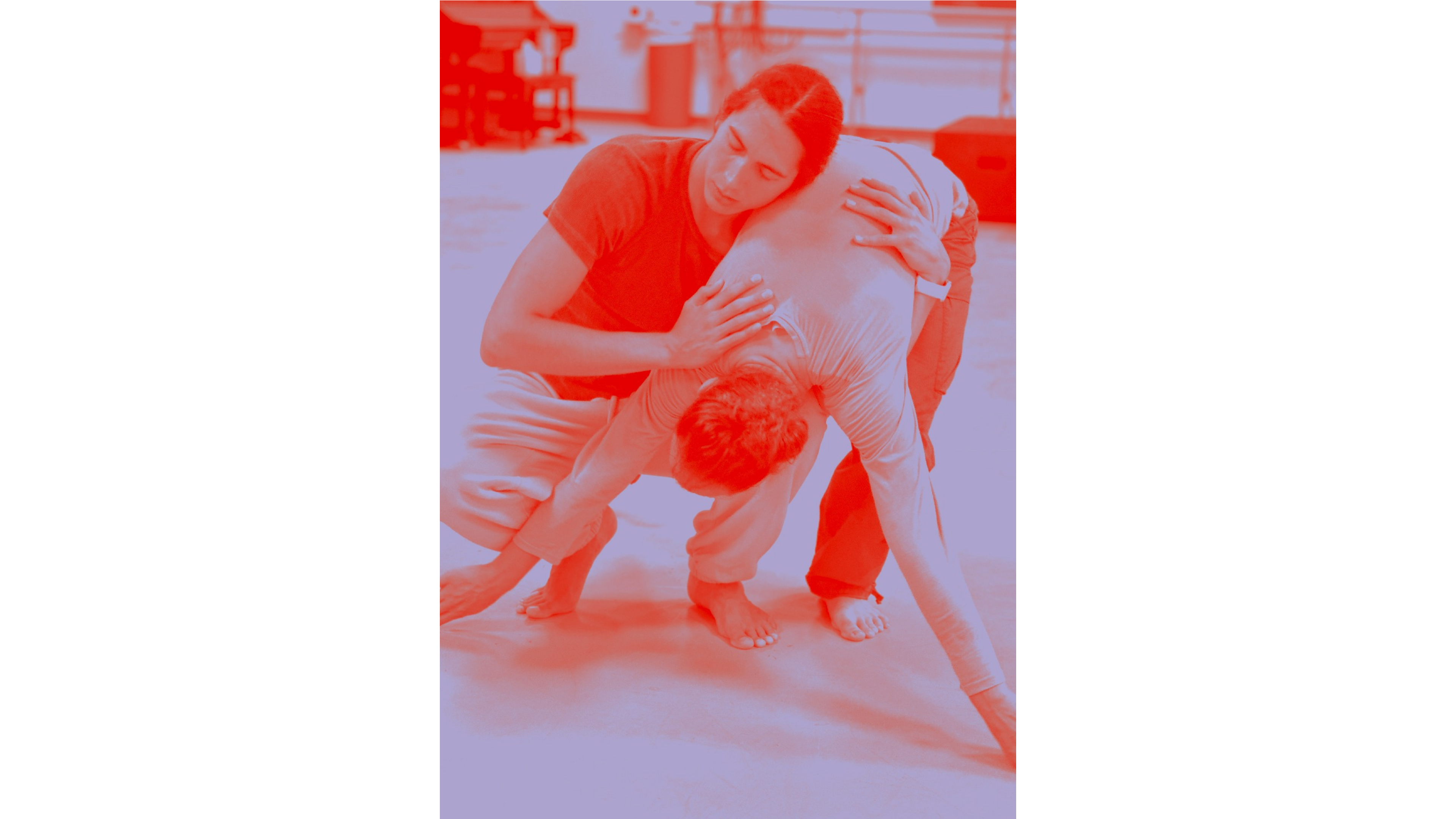
Photo: Rob Polmann and Montana Summers, rehearsing at Syracuse Stage, 2025
GOING FORWARD TOGETHER
At the centre of ROOM IN OUR HOUSE is an encounter
— between performers from different worlds,
carrying different histories,
meeting in the present.
They do not begin from sameness,
but from difference.
Through movement, voice, and presence,
they attempt to listen, to respond only after listening.
Their body becomes the starting point:
a place where histories are carried,
and where futures might begin.
This is an attempt—
to POLISH A RELATIONSHIP
to hold space,
and to keep asking what it could mean
to move forward together as humans
in kinship, as relatives.
THE SILVER CHAIN (POLISH A RELATIONSHIP)
Between the Haudenosaunee, the Dutch, and later the English, the concept of the Silver Chain was established as guideline for a peaceful relationship. This relationship is not based on hierarchy, but on the Haudenosaunee principle of “balance” in an interdependent world: whosoever should hurt or prejudice the One, should be guilty of injuring the Other.
Thus, the concept of a cooperative, mutual pact was created, implying that both parties actively engage in upholding this peaceful relationship. The Silver Chain represents the Haudenosaunee knowledge that different societies can be linked while still maintaining their identities. A Silver Chain is a strong chain.
It can neither rust nor be broken, yet silver does need to be polished to sustain its shine.
Montana Summers & Rob Polmann, rehearsing in Syracuse Theatre, June 2025
ARTICULATING THE CHANGE
The work of Robin Wall Kimmerer articulates a way of knowing that moves beyond scientific analysis alone— in her writing she proposes a way of knowing grounded in relationship, reciprocity, and a sense of responsibility; proposing that knowledge needs to be practiced in communion with the world, by actively engaging, with the body, the imagination and all of our senses.
To be in an embodied relation with the earth.
To remember the membership with the earth.
To recognize being part of it.
To remember the responsibilities to the land you’re on.
To become indigenous to the land you’re on.
(Nicole Beutler and the team had the pleasure of a long and invaluable conversation with the author, after which she allowed them to quote her in this booklet.)
ROBIN WALL KIMMERER
is a mother, scientist, decorated professor, and member of the Citizen Potawatomi Nation. She is the author of influential books such as Braiding Sweetgrass: Indigenous Wisdom, Scientific Knowledge, The Serviceberry: Abundance and Reciprocity in the Natural World, and The Teachings of Plants and Gathering Moss: A Natural and Cultural History of Mosses. She lives in Syracuse, New York, where she is a SUNY Distinguished Teaching Professor of Environmental Biology, and the founder and director of the Center for Native Peoples and the Environment.
ROB POLMANN
is a multidisciplinary dance artist and psychoanalytical coach, based in Amsterdam. His work focuses on the intersections of art and health care. Rob has been performing in Nicole’s work since 2018.
MONTANA SUMMERS
is a performing dance artist and emerging choreographer from the Oneida Nation of the Thames. Since 2015, Montana has performed in choreographies by a.o. Santee Smith, artistic director of Kaha:wi Dance Theatre.
MONTANA ADAMS
is a theatre artist with experience as a playwright, actor, dramaturge, producer, and director. Her art focuses on the narratives that have shaped her ommunity, and it investigates how communities interact with one another.
GARY SHEPHERD
is a composer and sound artist with roots in the rhythm-driven UK underground dancescene. Known for his releases as ‘Streamer’, he composes for contemporary theatre and dance, creating immersive supersonic soundscapes. As the long-time in-house composer of Nicole Beutler Projects he created the electronic score for this encounter, in collaboration with Ty Defoe.
TISHA THOMPSON
is an Indigenous fashion designer celebrated for her innovations and her deep respect for cultural heritage. Her designs combine the contemporary with traditional influences. Tisha is dedicated to promoting sustainable and inclusive fashion, using her platform to uplift diverse voices and support ethical practices. She created unique pieces for Montana Summers and Montana Adams.
JESSICA HELBACH
is costume designer, art director and curator. She works various for international theatre and dance companies and has been collaborating with Nicole since 2004.
EPILOGUE NICOLE BEUTLER
The stories, worldview, and cosmology of the Haudenosaunee survived despite coming close to extinction. For a long time, the European newcomers failed to recognize their knowledge, customs, and wisdom. It is time to listen and learn from the knowledge of those who were there before. It is time to make ROOM IN OUR HOUSE for their view on the world, while searching the path toward a common horizon for all humans and non-humans with the Earth. We still have a long way to go before colonial and ecological wounds are healed, and imagining the path towards world making is urgent in the midst of this storm.
Firstly, I want to express my heartfelt thanks to Neal for opening the door for this to happen. My infinite thanks goes also to Michelle for becoming a sister along the way; thanks to the all-inspiring Diane, Montana, Ty, Montana, Adah and everybody in Syracuse - for the trust in this journey that Rob, Gary, Justa, Maria, Nikki and myself undertook. Thank you, Joann from Syracuse Stage and thank you team of Rematriation for trusting our peaceful intention on Turtle Island. Thank you to the Chiefs, Clan Mothers and Faith Keepers for welcoming us on Mohawk, Oneida, Onondaga and Cayuga territories. Thank you, Leslie, for our time at the Treman Center. Thank you, Igor, Jessica, Tim, Bram, Durante, Raïssa, Lieke, Pauline, Maurits, Martin for joining forces with us for the realization of this project in the Netherlands. Thank you, team of Via Rudolphi for finding partners and programmers in the Netherlands. Thank you, Sarah and Suzy for your efforts in international relations and thank you to everyone I might forget to mention. Lastly, thank you to the universe that allowed us to go on this journey together.
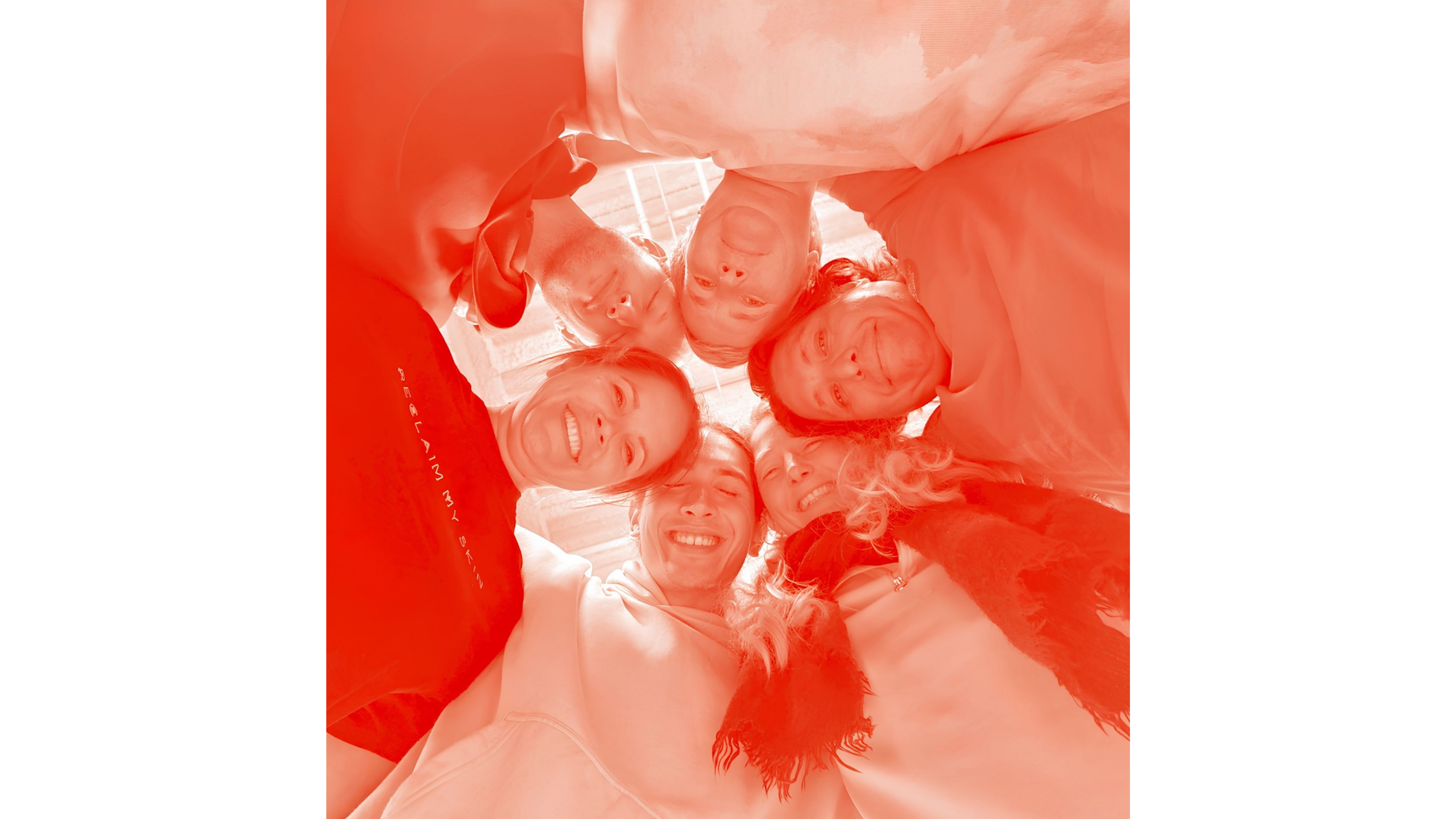
Michelle, Montana, Justa, Neal, Nicole, Rob, Syracuse Stage, 2025
CREDITS
CONCEPT & DIRECTION
Michelle Schenandoah (Oneida), Nicole Beutler (NL/DE)
CHOREOGRAPHY
Nicole Beutler in collaboration with the performers
DANCERS
Montana Summers (Oneida), Rob Polmann (NL/DE)
STORYTELLER
Montana Adams (Mohawk)
TEXT
Ty Defoe (Oneida/Anishinaabe), Michelle Schenandoah and the performers
MUSIC
Gary Shepherd (NL/VK | electronic composition), Ty Defoe (drum, percussion, flute), Adah Schenandoah (Oneida | voice, drum, percussion)
DRAMATURGY
Justa ter Haar (NL), Igor Dobričić (SRB)
COSTUMING
Tisha Thompson (Mohawk), Jessica Helbach (NL)
SCENOGRAPHY
Jessica Helbach (NL), Tim Vermeulen (NL)
SOUND DESIGN
Maurits Thiel (NL)
LIGHT DESIGN
Tim Vermeulen (NL)
REHEARSAL ASSISTANT
Catarina Ferreira da Silva (PT)
ASSISTANT DIRECTOR
Sebastián Paladines Cedeño (ES)
CULTURAL ADVICE
Neal Powless (Onondaga), Diane Schenandoah (Oneida)
PRODUCTION
Nikki Kracht (NL)
HEAD OF TECHNIQUE
Durante van Kuijk (NL), Tim Vermeulen (NL)
TECHNIQUE TOUR
Martin Kaffarnik (NL), Bram van Gameren (NL)
PR & MARKETING
Pauline van Kordelaar (NL), Lieke Scholten (NL)
BUSINESS MANAGEMENT
Maria Heidemann (DE/NL)
PRODUCED BY
Nicole Beutler Projects (NL) in coproduction with Rematriation (Haudenosaunee)
SUPPORT USA
Syracuse Stage, The Treman Center
SUPPORT NL
FPK, AFK, Fonds 21, Ammodo Art, Netherland-America Foundation
BOOKINGS NL
Via Rudolphi
WITH MANY THANKS TO
Joann Yarrow (Syracuse Stage), Jim O’Connor (Syracuse University), Salt Space, Andy Robinson (PR Productions TV), Leslie Carrere (Treman Center)
BOOKLET
TEXT
Nicole Beutler, Igor Dobričić
EDITING
Justa ter Haar, Pauline van Kordelaar
PHOTOGRAPHY KEY IMAGE
Kwadwo Amfo
DESIGN & ART DIRECTION
Studio Colorado
TALKSHOW
Watch Rematriated Voices here.
BOOKS TO READ
+ The DAWN OF EVERYTHING A New History Of Humanity by David Graeber & David Wengrow (2021)
+ American Indigenous Democracy: A Call for Interdependence edited by Jose Barriero (2026)
+ We Are The Middle Of Forever Indigenous Voices from Turtle Island on the Changing Earth by Dahr Jamail & Stan Rushworth (2022)
+ The Iroquois and Their Neighbors - Who Are These People Anyway? By Chief Irving Powless (2016)
+ Braiding Sweetgrass; Indigenous Wisdom, Scientific Knowledge and the Teachings of Plants by Robin Wall Kimmerer (2013)
+ Decolonial Ecology by Malcom Ferdinand (2022)
+ Not too Late by Rebecca Solnit & Thelma Young Lutunatabua (2023)
+ Staying With The Trouble by Donna J. Haraway (2016) + Quantum Listening by Pauline Oliveros (2024)
+ Is a River Alive? By Robert Macfarlane (2025)
+ Veerkracht, indianen van nu over de wereld van morgen door Serv Wiemers (2023)
+ Connectedness: an incomplete encyclopedia of the Anthropocene by Marianne Krogh (2020)
+ The Four Agreements by Don Miguel Ruiz (1997)
+ My Grandmother’s Hands/ Resmaa Menakem (2021)
PODCAST
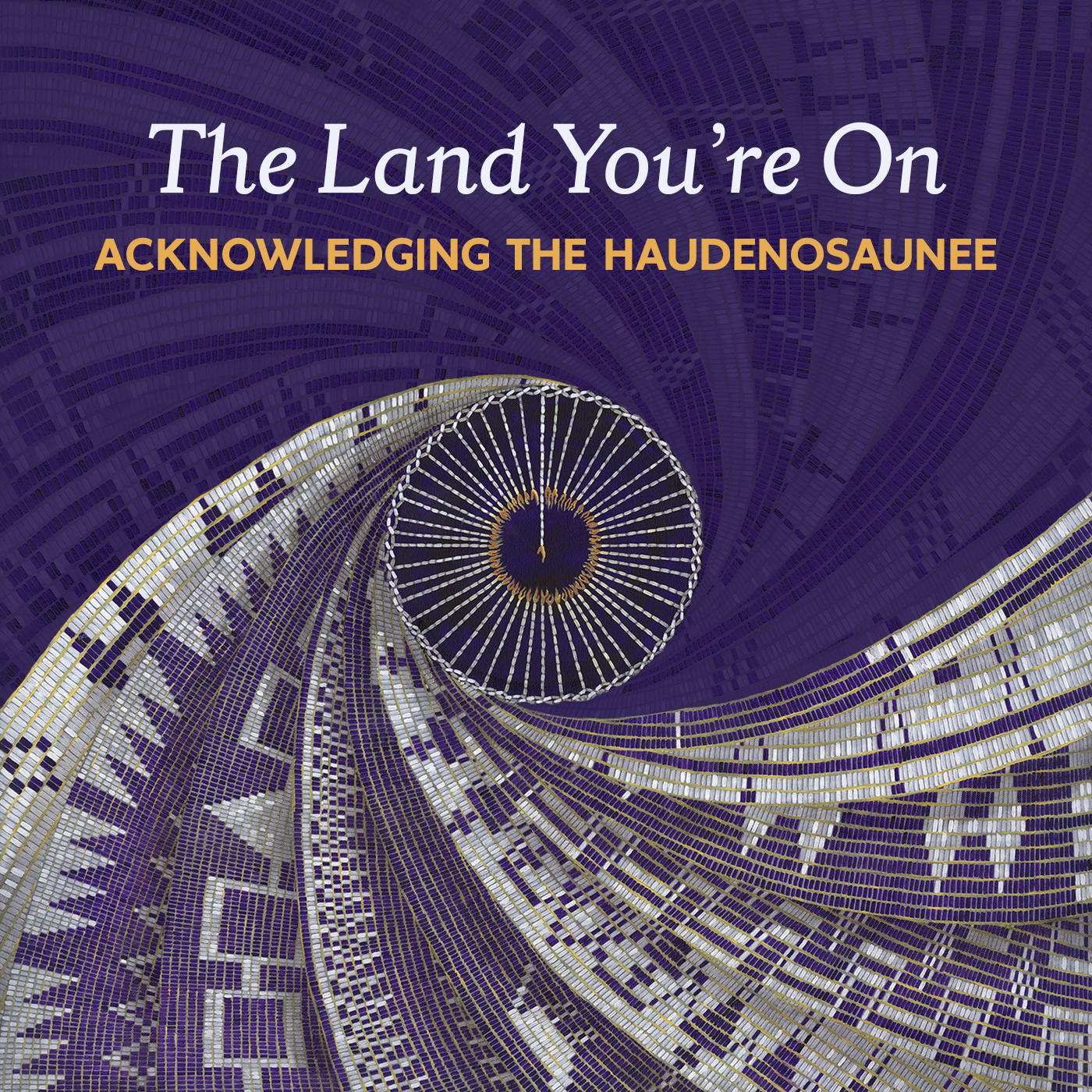
Listen to The Land You're On here.